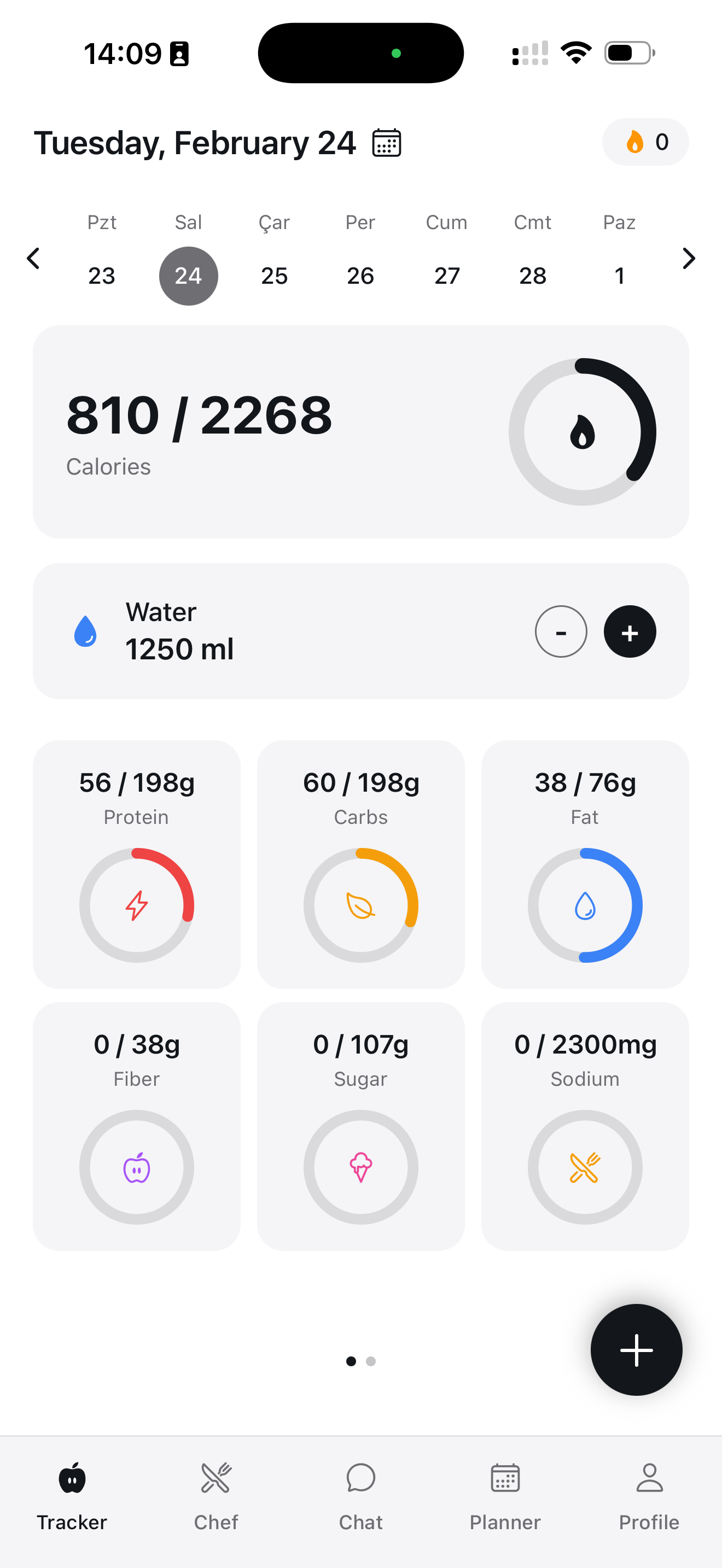
What Is AI Visual Food Recognition?
AI visual food recognition is a technology that uses artificial intelligence to identify foods from photographs and calculate their nutritional content automatically. Instead of manually searching through food databases, typing in dish names, and estimating portion sizes, you simply take a photo of your meal and let the AI handle everything. This technology has transformed calorie tracking from a tedious chore into a seamless, almost effortless habit that takes just seconds per meal.
Arori's photo calorie calculator is built on Google Gemini 2.5 Flash, one of the most advanced multimodal AI models available today. Gemini's visual understanding capabilities allow it to identify not just simple, single-ingredient foods but complex dishes with multiple components, sauces, garnishes, and layers. Whether you are photographing a simple apple or an elaborate multi-course dinner spread, the AI breaks down each element and provides accurate nutritional data for the complete meal.
The Technology Behind Google Gemini Vision
Google Gemini represents a leap forward in AI visual understanding. Unlike older computer vision models that relied on pattern matching against a fixed database of food images, Gemini uses a multimodal architecture that truly understands what it sees. It can reason about food composition, cooking methods, ingredient combinations, and portion sizes in a way that was previously impossible for automated systems.
When you take a photo of your meal, Gemini processes the image through multiple stages. First, it performs object detection to identify distinct food items on your plate. Then it applies food classification to determine what each item is, distinguishing between, say, brown rice and quinoa, or between a grilled and a fried chicken breast. Next, it performs portion estimation using visual cues like plate size and food proportions. Finally, it cross-references its identifications with comprehensive nutritional databases to calculate accurate calorie and macro values.
This multi-stage pipeline ensures that the results you receive are not just quick but genuinely reliable. The system is continuously improving as Google updates the Gemini model, meaning that Arori's photo calorie calculator gets more accurate over time without requiring any action from you as a user.
International Cuisine Support
One of the biggest limitations of traditional calorie tracking apps is their heavy bias toward Western foods. Try to log a serving of lahmacun, a bowl of pho, or a plate of jollof rice, and you often find yourself either unable to find the dish or having to build it ingredient by ingredient. Arori's AI visual recognition eliminates this frustration by supporting a genuinely global range of cuisines.
Turkish cuisine is supported with particular depth, recognizing dishes like kebabs, pide, borek, manti, mercimek corbasi, dolma, sarma, baklava, kunefe, and dozens more. Mediterranean staples, hummus, falafel, tabbouleh, moussaka, paella, are equally well covered. Asian cuisines including Japanese, Chinese, Thai, Korean, Vietnamese, and Indian are recognized with high accuracy. The same goes for Latin American, African, and European dishes.
This international coverage matters because accurate calorie tracking should not require you to eat like a nutrition textbook. Real people eat diverse foods from many culinary traditions, and a calorie tracker that cannot handle that diversity is fundamentally limited. Arori's broad cuisine support means you can track your meals accurately regardless of what you choose to eat, whether it is a home-cooked traditional dish or an adventurous restaurant meal from a cuisine you have never tried before.
Accuracy and Reliability
Accuracy is the single most important quality in a calorie calculator. If the numbers are not reliable, the entire tracking exercise becomes meaningless. Arori achieves high accuracy through a combination of advanced AI vision, comprehensive food databases, and smart estimation algorithms that work together to deliver trustworthy results.
The AI draws nutritional data from multiple authoritative sources, including national food composition databases, peer-reviewed nutrition research, and verified manufacturer data. When multiple sources provide slightly different values for the same food, the system uses intelligent averaging and prioritizes the most recent and most region-specific data available. This multi-source approach ensures that the calorie and macro values you see are as accurate as currently possible.
It is important to acknowledge that no visual estimation system is perfect. Factors like hidden ingredients (oil used in cooking, sugar in sauces), unusual portion sizes, and heavily processed foods can introduce some variance. Arori addresses this by always allowing you to review and adjust the AI's estimates. You can modify portion sizes, add or remove detected ingredients, and fine-tune the analysis before logging. This combination of AI speed and human oversight produces the most reliable calorie tracking experience available in a mobile app.
Portion Estimation: How It Works
Estimating portion size from a photograph is one of the most challenging aspects of visual food recognition. The AI uses several visual cues to make this determination. The size of the plate or bowl serves as a reference point, standard dinner plates are typically 25 to 28 centimeters in diameter, and the AI uses this as a baseline for calculating how much food is present.
The depth and volume of food are also analyzed. A flat serving of pasta occupies a different visual profile than a heaped portion, and the AI distinguishes between these cases. Likewise, the density of the food matters, a serving of leafy salad takes up more visual space than the same weight of steak, and the AI accounts for these density differences in its calculations.
After the initial AI estimate, you always have the option to adjust. A simple slider lets you increase or decrease the estimated portion, and the calorie and macro values update in real time. Over time, as you regularly review and adjust the AI's estimates, you develop a better intuitive sense of your own portion sizes, which improves your nutrition awareness even when you are not using the app.
Photo Tips for Best Results
While Arori's AI is designed to work with photos taken in a wide range of conditions, following a few simple tips can significantly improve accuracy. First, photograph from above whenever possible. A top-down angle gives the AI the best view of all food items on your plate and helps with portion estimation. Second, use good lighting. Natural daylight or bright indoor lighting helps the AI distinguish between similar-looking foods and identify individual components.
Third, capture the entire plate in the frame. Make sure no food is cut off at the edges of the photo. Fourth, separate foods when possible. If you are eating a mixed dish, the AI can still analyze it, but having distinct food items visible separately improves the accuracy of individual component identification. Finally, avoid extreme filters. Instagram filters and heavy color adjustments can confuse the AI's food recognition. Use your camera's standard photo mode for the best results.
These tips are helpful but not mandatory. Arori's AI is remarkably robust and can produce useful results even from imperfect photos. The key is to develop a quick habit of snapping a photo before you eat, within a few days, it becomes second nature and takes no more than two or three seconds per meal.
Photo Calorie Calculator vs. Manual Entry
Traditional calorie tracking requires you to manually search for each food, select the right entry from a database, estimate the portion size, and log it. For a typical meal with three or four components, this process takes two to five minutes. Over the course of a day with three meals and two snacks, you are spending ten to twenty-five minutes just on data entry. It is no wonder that most people abandon manual calorie tracking within the first two weeks.
Arori's photo calorie calculator reduces this time to about ten seconds per meal, take a photo, review the results, tap to log. That is a reduction of over 90 percent in the time required for calorie tracking. This dramatic improvement in convenience is not just about saving time, it is about making calorie tracking sustainable. A habit that takes ten seconds is infinitely easier to maintain than one that takes five minutes, and consistency is the single biggest factor in achieving nutrition goals.
Beyond speed, photo-based tracking also reduces the cognitive burden. Manual entry requires you to think about each food, recall its name, estimate its weight, and make decisions about which database entry best matches what you ate. Photo tracking outsources all of this mental work to the AI, freeing your attention for more important things. The result is a tracking experience that feels effortless rather than burdensome, making it far more likely that you will stick with it long-term.
Sustainable Calorie Tracking with AI
The ultimate goal of calorie tracking is not the tracking itself, it is the awareness and behavioral change that tracking enables. When you consistently track what you eat, you develop a much clearer understanding of your nutritional habits. You notice patterns, identify problem areas, and can make informed adjustments. But this only works if you track consistently, and consistency requires a method that fits seamlessly into your daily life.
Arori's photo calorie calculator is designed specifically for long-term sustainability. The speed and simplicity of photo-based tracking remove the friction that causes most people to quit. The AI handles the tedious parts, identification, portion estimation, nutritional calculation, while you simply make a habit of photographing your meals. Many Arori users report that photo tracking becomes as automatic as taking a sip of water before eating.
Over time, the benefits compound. As you accumulate weeks and months of tracking data, Arori can identify trends in your eating habits, highlight nutritional gaps, and celebrate your progress. The AI nutrition coach uses this data to provide increasingly personalized recommendations. What starts as a simple calorie calculator evolves into a comprehensive nutrition intelligence system that genuinely helps you eat better and feel better every single day.
Get Started with Arori's Photo Calorie Calculator
Getting started is free and takes less than a minute. Download Arori, create your profile, and start snapping photos of your meals. From your very first photo, you will see how much easier and faster calorie tracking can be when AI handles the heavy lifting. No nutrition expertise required, no tedious manual entry, no expensive equipment, just your phone, your food, and a few seconds of your time.
Arori's photo calorie calculator is continuously improving. Our AI model is regularly updated to recognize more foods, improve portion estimation, and deliver even more accurate nutritional data. The comprehensive food database expands with every update, covering more regional dishes, restaurant menus, and packaged foods. Whether you eat home-cooked meals, restaurant dishes, or packaged snacks, Arori's AI has you covered with fast, accurate, and effortless calorie tracking.